Plastic injection moulding is a manufacturing process used to produce plastic components in large quantities with a high level of accuracy and consistency.
How Does Plastic Injection Moulding Work?
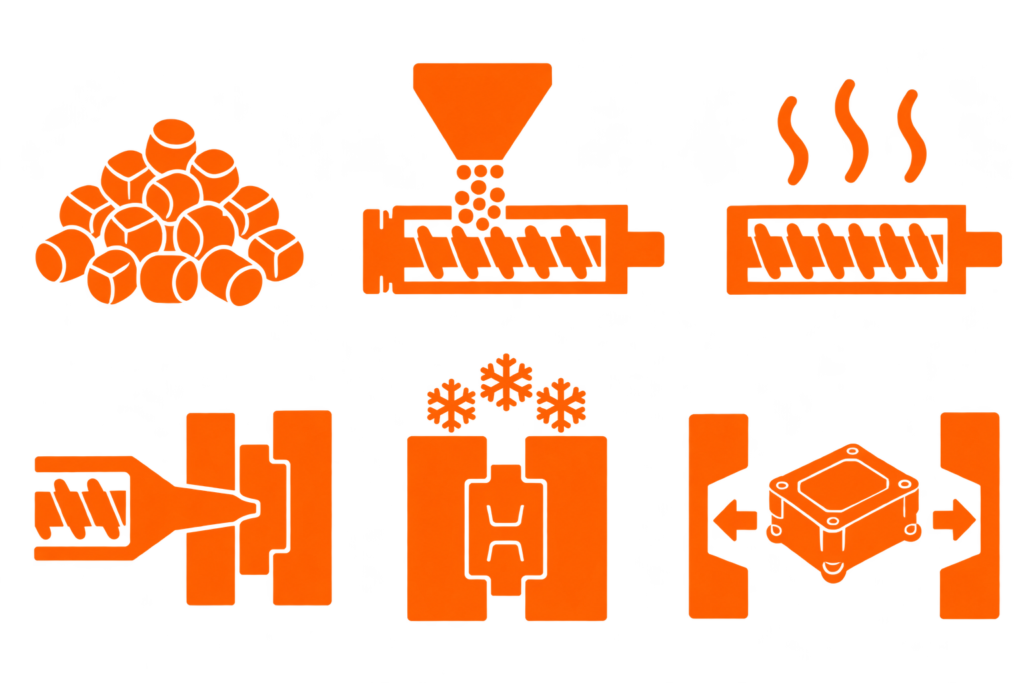
The process can be broken down into a few main stages.
Material is fed into the machine. Plastic granules are loaded into the injection moulding machine and fed into a heated barrel.
The plastic is melted. A rotating screw moves the material through the barrel while heat and pressure melt the plastic.
The material is injected into the mould. The molten plastic is injected under pressure into a mould tool which forms the shape of the component.
The component cools. The plastic is held inside the mould until it has cooled enough to keep its shape.
The mould opens. The finished component is removed from the mould, either manually or using robotic automation.
What Can Injection Moulding Be Used For?
Injection moulding can produce everything from very small technical components to much larger plastic parts.
Typical examples include:
Electrical housings and covers
Clips and brackets
Plumbing components
Automotive parts
Handles and knobs
Enclosures
Caps and protective covers
Construction components
Consumer products
Looking for a UK Injection Moulding Partner?
Whether you already have a mould tool or are looking at bringing a new component into production, we’d be happy to take a look.
Get in touch with Faber Technology to discuss your next plastic injection moulding project.